



Blog Menu G
Search
Categories
m
m
Archives
Tags
m
m
m
adobestock 48802384 768x528
With the fact that the majority of customers are acquired through web searches these days, it’s an absolute necessity for any business to have a sound web presence. In contrast, during the early days of the Internet here was no telling how important and indispensable that presence would become. While the design, usability, and content of a company’s website are all important for success in digital marketing, business owners also need to look long and hard as to where they...
adobestock 85965399 768x659

A good many of you who web designers out there may in fact be correct in your assumptions regarding what your defined audience wants, but there’s likely an equally large percentage of you who have made design, layout, and content choices with your site that have missed the mark. You might have hunches, and more than a few folks will have opinions for you. But how do you really take the pulse of how intelligently your site is laid out for and experienced by visitors. Here at 4GoodHosting, our expertise is naturally with quality web hosting in Canada, but our enthusiasm for trends in Internet... Read More

adobestock 97034277 768x512

Here at 4GoodHosting, we take pride in being a premier Canadian web hosting provider that serves customers from Victoria all the way to St. John’s. But we’d like to take a moment to explain why... Read More

adobestock 55680104

As a small business these days, you need to be strongly fortified and streamlined with your digital marketing and business management fronts, perhaps more so than with any other aspect of your operations. As a... Read More

Here at 4GoodHosting, we’re a premier Canadian web hosting provider, and as such you can be certain we love anything related to... Read More
If you live in the heart of a major metropolitan city, having a sports car that can do zero to 60 in... Read More
Here at 4GoodHosting, we’re a reputable web hosting service provider in Canada and we like to think we’ve got our thumbs sufficiently... Read More
As an experienced Canadian web hosting provider, we’re well aware that not ALL of our clients are in business - and more... Read More
Taking a critical look at big data gives companies valuable insights that allow them to make better-informed strategic decisions. Looking at these... Read More
These days, there are all sorts of expansive blogs and online discussion forums for pretty much every subject imaginable. The forums in... Read More
adobestock 86366212 768x613
reading time Reading Time: 4 minutes

If you’re enthusiastic and / or passionate about a subject matter - and that could be ANY subject matter - blogging about it is almost certainly going to be a personally rewarding experience. That’s particularly true when you receive interaction on your blog, and that’s most commonly in the form of comments and having others link to your blog. It’s a nice feeling to know your writing is being read, and that others are taking an interest in what you have to say. For some, there comes a point when they sense that their blog is capable of so much more. It’s true that some blogs are bonafide money makers for their authors and it’s quite common for well-established bloggers to think ‘hey, why can’t I make my blog profitable?’ Well, you can! But you need to take a strategic approach to it and get the most ideal web hosting from a reputable Canadian web hosting provider. Tips for Making Money From Your Blog Increase website traffic You not only want search engines to be your friend, you want them to become a powerful ally in making your blog more popular, and thus more profitable. The first most effective way to increase website traffic is to focus on increasing your social shares. The more people who share your content on social media sites like Facebook and Twitter, the more people will be motivated to visit your blog / website. The best way to accomplish this is to write great headlines that are SEO optimized and persuasive in prompting people to click on your links. Also provide easy ways to share your blog posts. Other ideas: Use long-tail keywords and do extensive keyword research Start writing posts for other blogs in your niche Install the CommentLuv plug-in on your blog to make it easier and more inviting for feedback and discussion Network and Reach Out To More People Plain and simple, you grow your blog - and in the bigger picture your brand - by networking extensively. Reach out every influencer in your niche. Connect with them, build relationships and frequently share their stuff on social media networks. Be proactive in...

You may find this interesting too.
adobestock 37876999 768x512

No one will be better informed than a Canadian web hosting service provider to detail the way today’s data centers can really ramp up operating costs. There’s a whole host of reasons for that, but nearly every one of them is contained in those centers’ digital architecture, and their sensors and instrumentation specifically. Making correct analyses of where inefficient operation is occurring is often beyond the means of even the most digitally savvy of us, but certainly not for the smart folks at Intel. Intel’s Data Center Manager helps data center operators lower costs and extend infrastructure life spans by automating data collection and presenting insights into ideal operating conditions and configurations. It involves identify and monitoring as many individual data points, so when there’s a problematic inefficiency, users are able to know exactly where it is. One of the common issues DCM data reveals is a need to increase the temperature in datacenters and thus minimize cooling costs. This shouldn’t come as a surprise entirely, given the ever-increasing workload these data centers face and the according way they will tend to run hot as a result. There are more data points than ever, and so by extracting that data and looking at it from a more objective perspective, you can be confident in choosing to turn up the temperature as a means of lowering your air conditioning costs. From there, the DCM team can set threshold levels and implement algorithms to try to predict temperatures and to alert datacenter operators of potential problems. Just one example of how Intel’s DCM is super effective in helping to manage and keep a Data Center cost controlled. Here’s more: Languages to Communicate Across OEMs All hardware manufacturers follow the Intelligent Platform Management Interface, or IPMI, specifications to report performance metrics independently of the hardware’s CPU, firmware, or operating system. Each brand customizes their IPMI feed slightly to differentiate their products, and that’s to be expected. DCM provides a simplified data feed to infrastructure and application performance managers to interpret or to connect with a facilities management interface. The out-of-band solution has its own discovery mechanism to locate network devices and languages, and...

You may find this interesting too.
adobestock 38796510 768x555
reading time Reading Time: 4 minutes

www.merriam-webster.com is pretty much the go-to online dictionary of choice these days, and it offers a full 10 different categorical definitions for the word domain, but most people will understand it to mean ‘space thats yours.’ The prefix ‘sub-‘ generally indicates a state of being beneath or under the suffix, whether literally or figuratively. Here at 4GoodHosting, we’re web hosting experts in Canada but we’re the furthest thing from that when it comes to dictionaries. Just this once though we’ll take a dissection approach to the word subdomain, and talk briefly about how it relates to web hosting as a whole. If we’re taking the literal meaning of it based on what’s explained above, it means ‘under space’ and while that’s vague and indeterminate it’s still fairly applicable. A subdomain is the part of the website address before the domain name. More in sticking with our definition here though, subdomains are known as ‘third level’ domains, or canonical names, and as such they’re ‘beneath’ a website’s standard URL that’s registered, recognized, and functional within web directories. To put it more simply and understandably, a website’s URL will begin with the very recognizable http: (hyper text transfer protocol) - but you’re probably more familiar with it as it’s subdomain - www.______. com / ca etc etc. Let’s use Merriam-Webster again as our example here. Their URL is https://www.merriam-webster.com/ but you’ll know them and link them with subdomain shown up on the first line of this blog post. That’s a subdomain! So why subdomains? Subdomains are commonly used to categorize portions of the website, and they can be easily moved to another server if the category gets very popular. Subdomains are also used by free web hosting providers to resell web space under their own domain name (e.g. http://membername.hostname.com). Each member will have their subdomain, but every one of them there will still share the domain name of the hosting provider. Subdomain names are also practical to balance the web servers for a high traffic website. Multiple web servers are assigned different subdomains like www.sitename.com, www1.sitename.com, www2.sitename.com etc, though each of them contain the same application code. When the request comes from...

You may find this interesting too.
adobestock 109401734 768x512
reading time Reading Time: 4 minutes

The very nature of the two terms ‘want’ and ‘need’ make very clear that there’s a big difference between the 2 of them. The majority of the time we will want something, but it’s hard to rationalize saying that we truly need it. There are exceptions to this of course, and considering we’re going to be talking about speed here this week we’ll go with an automotive analogy. Many car enthusiasts – and guys in particular – would like to have a sports car with a powerful V8 engine under the hood and performance suspension tuning, but in reality their Toyota Corolla suffices for their day-to-day driving habits. Take a highway patrol officer, however, and having a vehicle that’s got plenty of acceleration and top-end speed at its disposal is every bit a necessity. Nearly every Canadian web hosting provider is going to make a point of offering speedy web hosting servers available to their customers these days, and fact is that’s a reflection of a demand based much more in need than it is in want. If your website serves as the primary contact point for e-commerce aims, then slow-loading websites and ones that are sluggish to respond may well be taking a big chunk out of your sales and revenue. Sales and conversions come from the combination of effective content with faster loading speed of your website, and you had better believe that prospective customers are as impatient as ever. For years now, surveys have showed that loading speed of websites has a great impact on their traffic trends. So how is yours measuring up, and is it being hindered by slow servers? Revenues taking a hit? ‘Bounce rates’ are a statistical reflection of visitors who choose to leave your site prematurely. A number of studies have proven that the average visitors will leave your website if it does not become accessible in 3 to 6 seconds. We could go into detail here, but really there’s no need – once they’ve bounced, they’re likely not coming back, much less making a purchase of any sort. Here’s a relevant example. Shopzilla generated 12% more revenue by simply improving their...

You may find this interesting too.
adobestock 92222238 768x544
reading time Reading Time: 5 minutes

We’re all familiar with what it means to ‘vouch’ for someone or something. That is, to say that you can attest to the quality or reliability of that individual or product. Many of those competing in the online world may not know the value of link building, however, but your Canadian web hosting provider will be explicitly aware of that value. Google of course is the world’s premier search engine, and it uses links to measure the authority of web pages. If a web page attracts links from other pages Google's algorithm, the software it uses to rank pages and decide which page is number one for a search result increases the importance of a page - and thus how high it places in search engine results. So in a sense it’s just like a vouch for that page - you feel there’s value there, and you’re recommending visitors might want to consider visiting it via your page to gain more in the way of quality information on the subject. So let's now take a look at some of the more common link building techniques, and ones that will be much easier to incorporate into your webpages, blog, or other digital communications. Forums Link building techniques using forums typically involve creating a profile page and a signature link. Signature links allow links to be created at the bottom of posts or comments left in a forum. Signature links tend to be regarded as low quality though, and while they may send a measurable amount of traffic they likely won’t have any long lasting impact on the pages you link them to. These links are not merit based, and search engines - Google in particular - are getting better at ignoring these links and assigning them no value. Link Farms The link farm technique is a standard approach form SEO companies. A link farm can often have a vast number of websites and web pages within it, all under the control of the individual link builder. Building a link farm link allows them to offer a set number of links for a specific fee, and the extent to which this can...

You may find this interesting too.
4gh blog post pic.webp
reading time Reading Time: 7 minutes

It’s increasingly rare these days to find a business that doesn’t have their own website. As is the case with every one of them, there’s a whole lot of work that goes into a website – planning, designing, and the actual construction of the different HTML elements that together make up those web pages we’re happy to just visit and browse through as we like. Be aware that there are choices you can make when putting your website together, however, that can have negative repercussions down the line and quite possibly sabotage the successes you envisioned for yourself when you decided to take your business onto the World Wide Web. Start with the Right Conceptual Thinking First off, all of the following are FALSE: I need a flashy website that looks ‘cool’ Believe us when we tell you that substance trumps flush in a big way when it comes to the entirety of your online presence. Stressing to your web designer that it’s all-important to have a ‘cutting edge’ site is creating the wrong perspective for what you want to be accomplishing here. Keep in mind that this isn’t a competition about ‘looks’, it’s about effectively conveying to your customers THAT WHICH IS IMPORTANT TO THEM – which, in nearly every instance, is a quality product or service that’s priced reasonably and comes with positive reviews from buyers just like them. What your website looks like will pretty much be the last of their considerations. It’s always good to save few bucks by having my friend / relative / other design my website for a discount For sure, hiring designers or developers with many years of experience and a proven portfolio of work can be expensive. The best professionals can and do charge what they do because – in addition to designing the website – they also often research, plan, and strategize the entire conversion process and site flow as well. Needless to say, you stand to benefit IMMENSELY from this value-added part of their service, and these types of analytical approaches are very likely going to be beyond the ability of the guy or gal you know. Hiring a...

You may find this interesting too.
adobestock 127688780 768x512

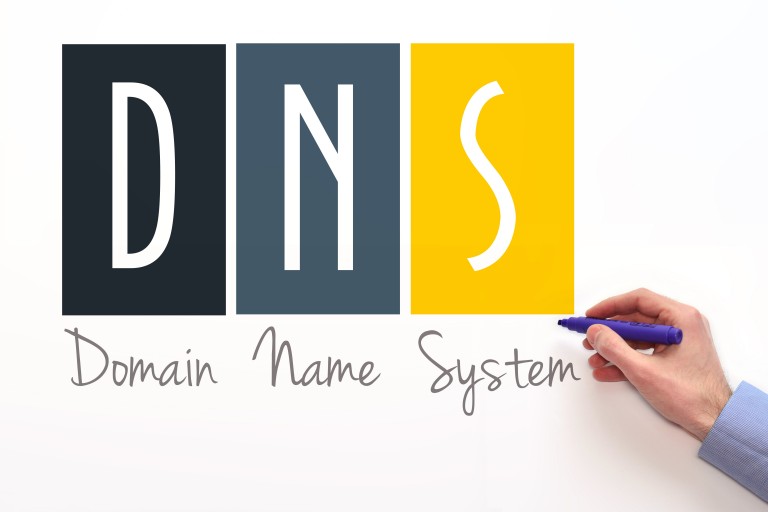
DNS isn’t exactly a buzzword in discussions among web hosting providers or those in the web hosting industry, but it’s darn close to it. DNS is an acronym for Domain Name Servers and what DNS does is see to it that after entering a website URL into your browser you then end up in the right spot - among the millions upon millions of them - on the World Wide Web. When you enter this URL, your browser starts trying to figure out where that website is by pinging a series of servers. These could be resolving name servers, authoritative name servers, or domain registrars, among others. But those servers themselves - often located all around the world - are only fulfilling an individual part in the overall process. The process itself is a verification of identities by means of converting URLs into identifiable IP addresses, which the networks communicate with each other and by which your browser confirms that it’s taking you down the right path. In a world with literally billions of paths, that’s a more impressive feat than you might think, especially when you consider it’s done in mere seconds and with impressive consistency. It’s quite common to hear of DNS in conjunction with DDoS, with is another strange acronym that is paired with the term ‘attack’ to create a phenomena noun. What DDoS is and how it’s related so explicitly to DNS much of the time is as follows: A DDoS attack is a common hack in which multiple compromised computers are used to attack a single system by overloading it with server requests. In a DDoS attack, hackers will use often use infected computers to create a flood of traffic originating from many different sources, potentially thousands or even hundreds of thousands. By using all of the infected computers, a hacker can effectively circumvent any blocks that might be put on a single IP address. It also makes it harder to identify a legitimate request compared to one coming from an attacker. The DNS is compromised in the way browsers essentially can’t figure out where to go to find the information to load on the...

You may find this interesting too.
4goodhosting fiberoptic
reading time Reading Time: 3 minutes

In all this talk about, servers, databases, cloud storage etc etc., fibre optics have been a bit of a lesser light despite being the unsung hero in the successes we’ve seen in the supercharging the digital world. Now some of you will know what a Terabyte is, and others won’t. Most of you will be familiar with a Gigabyte though, and a Terabyte is 1,024 gigabytes. That’s a lot of capacity, and with that understood fibre optics cable these days can achieve transfer speeds up to 255Tbps. Simply put, that’s blazing fast and nearly every Canadian web hosting provider we don’t overlook the value those transfer rates have in letting us work with our clients in making their websites - and in the bigger picture their online marketing efforts - really pay off. What’s different nowadays is that it’s not just one single-core fibre. Fibre optic cables now feature a multi-core glass stem that allows for an enormous load of data to flow through it. While this technology is still a long way off from being used extensively throughout cities, it’s setting the tone for the newer upgrades poised to hit the fibre optics market, and they’re not far off. Information Super Expressway Many cable providers plan to upgrade their lines, with some of the major cities in the world soon to see cables capable of handling 400Gbps. That’s a huge upgrade from the current standard of 10Gb/s that many companies use. The newer fibre optic cables also include a host of upgrades and capabilities that really outdistance them from their predecessors. Here’s a quick reference of the improvements: Security - The integrity of an optic cable actually plays a role in how easily hackers can force their way into data stores. Now, fiber optic cables use light. That makes it tough to ‘grab interference’ as the term goes. About the only way to break into them is to physically break the cord. Since they use light to transmit data, all of the light escapes and makes it easy for network security to notice breaches in data. Design and Speed - These newer materials are lighter and thinner too. They...

You may find this interesting too.
adobestock 48881340
reading time Reading Time: 4 minutes

Anyone familiar with the acronym ARPANET? Perfectly understandable if you aren’t, even many in the IT World likely wouldn’t have a clue. So let’s introduce ARPANET and it’s significance to one of the more predominant technical developments in computing these days. ARPANET is the network that became the basis for the Internet, and began with the interconnection of four university computers in the late 60s. ARPANET sent information in small units called packets that could be routed on different paths before being reconstructed at their destination. The development of the TCP/IP protocols in the 1970s made it possible to expand the size of the network in a much more orderly way. The initial purpose was to communicate with and share computer resources among users at the 4 different connected institutions, and with that connection the application principle behind cloud computing was born. Today, we often hear the term “It’s in the Cloud” or “that’s Cloud based”. But what does that mean exactly (and as some might ask, ‘why is Cloud capitalized?’) To put it simply, data existing in a cloud simply means that it exists on multiple computers at once. Before understanding cloud technology you’ll need to have a basic grasp of server technology. Servers are powerful computers, similar to the technology in a desktop computer, just must more dynamic. When you take all the CPU power and memory of a server and make it a virtual server, the advantage becomes that it doesn’t physically exist anywhere, and can be moved from one host to another as needed and automatically. This is the “Cloud”. The virtual server that is created can move from one host to another as needed and be given more resources or drive space by grabbing more from the storage servers, known as SANs (Storage Area Network). Trends in Cloud Technology So despite being 48 years in the making, it’s only in the last 15 years or so that Cloud computing has established itself. Even that number may surprise some who would think it’d be much less given the ‘newness’ of the technology to the public. In the early 2000s, Clouds were used, but they were more...

You may find this interesting too.
googlesux
reading time Reading Time: 4 minutes

There’s no debating that Google is the world’s #1 search engine, and any website that exists for e-commerce should be tailored to match (at least reasonably) Google’s ever-changing search algorithms. Reliable web hosting is one thing and gets you solidly set up on the information superhighway, but you need to compete. But what about Bing? Some people are quite surprised to learn that Microsoft’s search engine is still a legitimate competitor for Google when it comes to being someone’s go-to searcher. Bing is also holding its own when it comes to being a destination for Search Ads, and it seems there’s a good number of reasons why some businesses are still considering Bing for at least part of their ad placements. Currently, Google owns 65% of market share for US searches, but that’s down from 72% since 2010. Where’s that 7 percent gone? You guessed it – Bing’s had the most growth over the last year, moving up to 19.7% (in part continuing to be powered by Microsoft’s acquisition of Yahoo years ago). So when it comes to cost-effective search ads - what’s the better choice - Google or Bing? Bing Keep in mind that Internet Explorer is still the default web browser for a Windows device, and Bing comes as the default search engine. This is a clear reflection that most Bing users are: Less computer savvy, given the fact that they’re not able to or not interested in upgrading to a more modern and functional web browser Generally over 35 years of age More of the blue-collar employment type as compared to white-collar It’s not difficult to identify how these findings validate Bing as a still-popular search engine. The blue-collar, over-35 working middle class crowd makes up a HUGE part of the purchasing public in both Canada and America and - you guessed it - because their PC came with Bing as the default search engine, more often than not Bing is their search engine. Google Google has hundreds of thousands more total searches and holds more of the market share in all countries except Russia, China, South Korea, and Japan. Research suggests that Google users are: Generally...

You may find this interesting too.
On This Page G
Explore 4GOODHOSTING
Copyright © 2026 4GoodHosting. All Rights Reserved.
.CA by CIRA
+1 866 708 4678