



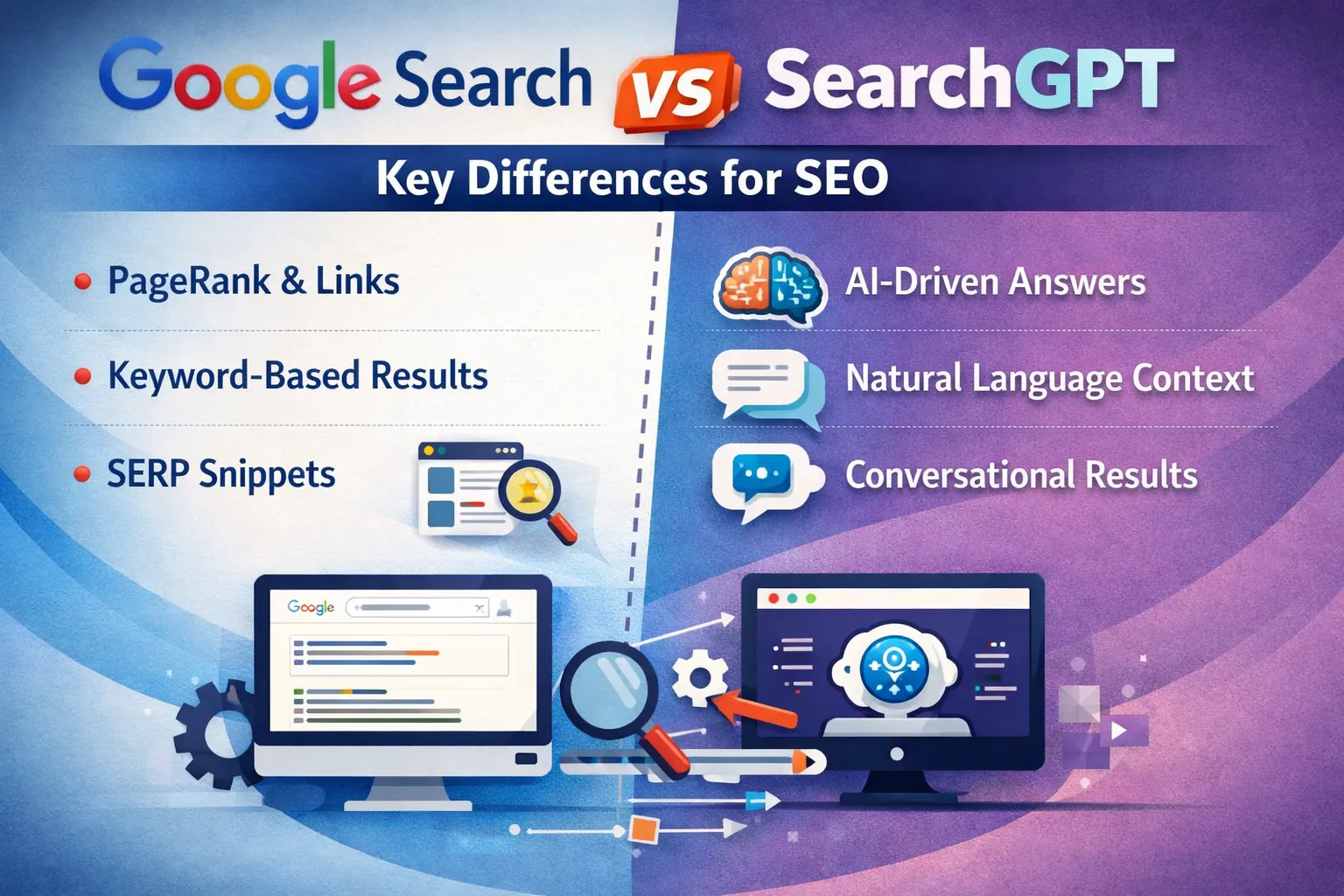
 The way that we search and interact with information online is going through a radical change in the digital age because of how Artificial Intelligence has changed how we think about and create Search Engines. AI has changed the way we interact with Search Engines into a more conversational format. Online users are now using an AI as their means of searching for information rather than the traditional Search Engines we used to use, like Google. AI-enhanced searches will allow us to have a more informed conversation about what we want to know rather than just entering in a few keywords into a search engine. For those of us involved in Digital Marketing and/or E-Commerce, we can no longer simply rely on what we have done; we must keep up with the changes being made to Search Engines so that we can compete effectively in the online marketplace. These changes in the Search Ecosystem will require the adaptation of our SEO strategies, the optimization of our content for conversational searches, and a complete re-evaluation of the definition of Value-Driven Content in the Search Ecosystem since it is fundamentally different when users are interacting with Search Engines through AI.
Understanding the Search Evolution
The revolution has begun in the way search works, and Google has led the way for more than 20 years. Daily, millions of searches pass through Google via its search algorithms, combined with its very large database or Index. Recently OpenAI introduced "Search GPT," which represents a radical change in how search is done, moving toward a conversational model that focuses on understanding users and their questions in a contextual manner, rather than just matching keywords.
This new model of search creates opportunities for businesses to alter their methods of selling products and services online, as well as giving consumers new means of finding those businesses' products and services.
How Traditional Google Search Operates
In the digital era, a fundamental shift is underway in the processes where humans find and interact with information online. As artificial intelligence reinterprets search technology, it leaves the classical monopoly of search engines like Google under threat from AI-guided search tools like Search GPT. These intelligent, dialogue-based search experiences are redefining user expectations, shifting from keyword-level queries to contextually aware, intent-driven answers.
This metamorphosis holds staggering ramifications for SEO strategies, content, and visibility. For eCommerce and digital marketers, differences between the traditional search ahead of the AI search are no longer something optional to know; it has become something that is imperative to know to maintain competitiveness. Operating in this new search ecosystem will involve adopting algorithm changes, optimizing for conversational queries, and transforming the very nature of how value-driven content is articulated in an AI-first search environment.
Search GPT: The AI-Powered Alternative
Differently, call it search GPT. Unlike the organic search engines that come back with a long list of links, search GPT answers users in a conversational way and directly cites the source of information.
What Sets Search GPT Apart
Developed by OpenAI, Search GPT uses large language models to make sense of the natural language queries and respond contextually. The algorithm learns through use and interaction and adjusts its responses to improve its understanding of the user intent and accuracy of its answers.
One important difference is the way that Search GPT presents a cleaner ad-free experience to users who are interested only in great content and not commercial hooks.
Important Functions
Search GPT uses a conversational interface to ask questions in an easy-to-understand format. Users can ask follow-up questions based on previous searches, thus enhancing the dynamic and intuitive perspectives of searching. It features instant response with the relevant citation attached to it.
The arrangement minimizes the risk of misinformation by putting premium publicity on quality and credible sources on its pages. Among its many advanced capabilities for extensive browsing, the one that stands out is the personalized AI-enabled learning system that customizes every search for the user in future use.
Critical Differences for SEO Strategy
This is where understanding the differences and similarities between these platforms is necessary to develop optimization strategies that can work well across both ecosystems.
Personalization and User Engagement
Google had perfected its individualization strategies during its evolution by accumulation of user data and algorithm upgrades. Only indirectly is first aimed towards retrieval rather than an interactive, conversational method.
Search GPT converts that search experience into an almost interactive conversation. Taking care of contextual intent makes it very useful for customer service-type applications such as chatbots and conversational commerce: the areas particularly related to eCommerce SEO strategies.
Online sellers must now approach their product content from an entirely different perspective and viewpoint for both how the material is organized and how it is presented. Furthermore, businesses should create product content that answers questions in a "natural" manner and provides a high level of detail. With the assistance of Artificial Intelligence (AI), this detailed information becomes a structured and logical response to consumers, and the traditional practice of focusing on keyword density should no longer be utilized.
The Quality of Content and Context
Google views a complete content-driven website to be optimal, yet it still utilizes numerous other "traditional ranking signals" such as backlinks, domain authority, and location of keywords. The Search GPT has developed the ability to understand the context and meaning of a query by recognizing that there is additional information available from numerous sources and that to develop an accurate and rich description of that information requires multiple points of reference.
There is no need to overly fill a website's content with keywords or to have "ideal" keyword usage. Website content should be created with continuing to learn from information as the primary goal; therefore, the website should be presented in a manner that makes it easy for people to make use of the information presented to them. As a result, there should be a way for the AI to receive a greater quantity of information in a more simplistic and verifiable way.Semantic Testing and Quality of Information
Both Google and Search GPT have significantly changed the way people access real-time news with Google's continual crawling and indexing of all new information and trending topics on an everyday basis; in contrast, Search GPT uses multiple sources for its generation of an extensive answer in context; however, its training data has a narrow time-frame for producing relevent content on rapidly changing topics (this will undoubtedly improve through continued technological advancement). Both platforms increasingly emphasize the importance to their SEO strategies of using structured data through schema. According to Google, when schemas are properly implemented in this manner, the result of the rich snippet appears on SERPs as an increase in CTR and upper level visibility. However, to Search GPT and other similar systems, the use of schema has the opposite end results; schema allows AI systems to learn how to search through websites and content effectively.
Implications for eCommerce SEO
The rise of AI-powered search has tremendous consequences for eCommerce businesses. Product discovery today is evolving from the traditional past of keyword search to one that converses where the user describes his/her needs and preferences in natural language.
Optimising Product Information
With the advent of AI, website SEO needs exceedingly detailed and conversational product descriptions that put forth answers to likely customer questions. What is really needed is not depersonalized, keyword-heavy copy but descriptions that give a full picture of the product, its specifications, uses, comparisons, and customer concerns stated in a natural way within the text.
Product pages must contain an FAQ section that anticipates the kinds of questions customers might ask an AI. This ultimately enables engagement both with standard search engines as well as with conversational AI ones.
User Reviews and Social Proof
Customer reviews become particularly valuable in the era of AI search; Search GPT or similar systems use review information This means that balanced product reviews become an important ranking signal and trust issue based on authentic customer feedback.
In the realm of SEO eCommerce, obtaining customer review generation and management should become the next vital thing. The quality and authentic nature of reviews contribute to traditional rankings as well as AI product recommendations.
Technical Implementation
eCommerce sites must ensure technical excellence across multiple dimensions. Much remains the same in a fundamental sense: fast loading speed, great mobile experience, secure checkout process, and complete product schema markup. However, this has to cover a lot more, including chatbot interventions, detailed size guides, comparison tools, and product selectors that interact in the maintainable way the users apply to AI search systems.
Why Businesses Should Hire SEO Specialists
Performing optimally in this new search landscape requires special skills-passing keyword research and link building and able to manage the dynamics that are increasingly emerging. The emerging dynamics will make it beneficial to hire SEO specialists who understand their way through optimizing a traditional search engine as well as this new AI-powered search systems.
Expertise in Dual Optimization
The professional SEO experts keep track of algorithm updates from traditional engines as well as an understanding of how AI systems analyze and rank content. With both paradigms able to generate good results, businesses are kept from visibility loss in this transition.
Strategic Content Development
SEO experts supervise the content creation process, merging somewhat traditional optimization methods with the more context-rich, conversational ones preferred by AI systems. They know to format information for the utmost impact in both environments wherein the content fulfills its purpose from the perspective of human readers and its contents are readily understood by machine-learning systems.
Technical Implementation Expertise
Current technical SEO concerns exceed the basic space of website optimization. Specialists can push harder for advanced schema markups, grateful for voice-search optimization, in dank of mobile-first indexing, and construction of content architectures that AI systems can actually crawl and comprehend.
Competitive Advantage
According to the very nature of search, the distance between those companies that have embraced it and those which haven't now becomes bound to get farther and farther apart. The importance of hiring an SEO expert is that they can help encourage the companies to benefit from recognized innovations rather than trying to protect themselves from their disruptive force. Such expert guidance mostly finds businesses at the forefront in predicting trends, proactively implementing best practices, and being able to enjoy maximum visibility wherever change is kindled in search behavior.
Practical Steps for Adapting Your SEO Strategy
The manner that businesses prepare for the ever-changing search engine landscape is to keep performance high on the older search engines.
Audit and Optimize Content Quality
Review existing content to determine how well it is answering user questions, if at all, comprehensively and accurately. Point out those places where perhaps a bit more detail, context, or explanation would enhance its value. The emphasis in the content should come from the perspective of an expertise-authority-trust-building principle that resonates with all search platforms.
Implement Schema Markup to the Fullest Possible Extent
Structured data should be applied to all possible pages to make it easier to entities, either traditional search engines or AI systems, to comprehend your content. All of these schemas-products; FAQs; reviews; and organizations-will enhance visibility and interpretation.
Develop Natural Language Query Optimization
Discover what actual questions are asked by your audiences with respect to your products or services. Include such natural language queries in your content strategy by creating pages/sections that directly answer those queries being asked by the largest volume of people in a conversational manner.
Developing Conversational Content Formats
FAQ sections, how-to articles, comparison pieces, and detailed product descriptions should match the pattern of conversational search. These formats rank well in traditional search engine optimization and are handy for AI-powered systems.
Track and Measure Performance
Track rankings and traffic from traditional search engines but also if possible how content performs on conversational AI platforms. Develop actionable insights from both sets of performance data and adjust the strategy based on real-time feedback.
The Future of Search and SEO
It has never been more energetic the struggle of traditional searching engines against AI with the potential to be developing into a whole ecosystem of search modalities meeting different user needs in different contexts.
Google has been relentless in its efforts to assimilate AI technology into its search platforms, as evidenced by investments such as the Search Generative Experience, while still maintaining its rather dated and archaic base. Meanwhile, AI-powered search engines have tried upping their game by getting around problems regarding the currency of information and the verification of sources.
Flexibility, continuous learning and an ability to generate real value in content will identify SEO success in this landscape for both profession and business alike. So in the evolving tactics, the fundamentals of SEO remain true that is user intent, relevant information, technical excellence and authority building.
Conclusion
It is a significant advancement in how people get information online that such AI-based search technologies like Search GPT and the likes have started to develop. While traditional search engines continue to dominate the scene through indexing, data in real time, and algorithms, AI puts into place unique strengths in terms of personalization, natural interaction, and delivery of answers.
Changes in SEO have been inevitable for eCommerce brands. It needs blended search not only from quality content which is relevant in context to the humans reading it, but which can also be understood easily by AI systems. This calls for technical excellence over the traditionally defined SEO factors and the adoption of newer types and forms for conversational search.
Such a transition is complicated, making it important to partner with accomplished SEO professionals who can proficiently manage both old and new search technologies. Whether for eCommerce SEO or all-round digital marketing strategies, it is the mechanism understanding then adaption to it that will eventually result in taking a company and its agency into the new search arena of presence and success.
Thus does the evolutionary process continue, and the most advanced companies will be those that view this not as a threat but as an opportunity to develop even stronger customer relationships, provide better information, and set themselves apart through multiple discovery channels. Future search scenarios are both traditional and conversational, keyword-driven and context-creating-and those businesses with that brainpower will win in the new digital universe.