


 Every creative craves to experience that moment.
Just that little tug of inspiration.
That fire in your chest.
That little voice announcing: "There's more I could do. I could be building something of my own, you know."
Maybe during your morning commute.
Perhaps it was a result of clients not giving your ideas due recognition at work.
Or maybe in the dead of night when you continue scrolling through those well-designed websites and thought of, "I can build this… I can build something better."
If you’ve been dreaming about quitting your job, taking control of your time, and finally starting your own web design business, you’re not alone—and you’re not crazy. The digital world has never been more alive with opportunity.
It's among the best freelancing careers in terms of flexibility, creativity, and profit. Aside from the right skill set, it only requires the right mindset and a proper foundation.
It will take you through everything: why starting a web design business is worth, what it takes to start one, and the exact steps from thinking about it to clients are paying me.
Let's start.
When should you start a business in web design?
There are many reasons people quit their jobs and take the plunge into design entrepreneurship, and you might find yourself in one of these:
You want freedom-or rather, you want the real freedom.
Not "two weeks paid leave" freedom.
Not "request time off and hope for approval" freedom.
Web design allows you to control your time, your schedule, your location, and your clients.
You want more than a fixed salary.
An Employee fixed earning has a ceiling.
Owner of a web design business creates income barnacles as his skills increase in scope, reputation, and customer base.
Have maintenance retainers or web design packages for small businesses, and you have created predictable monthly income.
You want meaningful creative work.
real and helpful to someone's business.
Work counts.
Start on a small scale grow into a larger enterprise.
No store.
No stock.
No million-dollar cash investment.
Your laptop and your skills are what you need.
The demand keeps exploding.
Every business-from local to global-needs to have a website.
Every creator, coach, consultant, and freelancer needs to be online.
And many want to find someone to design, update, and maintain it all for them. Your timing is perfect.
What You Need to Start a Web Design Business
Most people think that designing a website takes expensive equipment or some really advanced programming knowledge. However, once you understand the basics, you can start from simple and scale up as you learn.
Here is what it really boils down to:
Basic Knowledge of Web Design
The basic rule is to understand at least more than your clients—not on the basis of being a full-stack developer.
Start with Basic:
- Understanding domains with web hosting
- Basic structure of a website
- Basic process of design phases
- Wireframes
- Using WordPress or other CMS tools
- Understanding with page builders (Elementor, Divi, Gutenberg)
- Basic UX UI principles
It can also be worth having:
- How to optimize images and speed
- SEO basics
- Basic security
- Then, with customization knowledge, HTML/CSS will be required.
If all this sounds complicated, get started building your first test sites with WordPress-it's the worldwide standard, and it's the way to go as a freelancer.
Good Equipment
Fancier isn't really necessary here.
Here are your basic tools:
- A laptop or desktop ;
- Stable internet;
- Headphones or earbuds;
- A code editor (VS Code works great);
- WordPress development tools;
- A backup solution (Google Drive, Dropbox, external disk);
Strong Hosting Partner
This is the area where most new designers make a major mistake:
They go for cheap, unreliable hosting.
Hosting becomes the backbone of whatever you build as you scale your freelance web design business. It also covers everything you do for your clients.
That's why you find innumerable designers opting for 4GoodHosting-a reputable hosting provider for web designers in Canada. Fast servers with solid security, managed WordPress updates, agency-friendly features make it easy for you to deliver better output without worrying about technical difficulties.
You could check out WordPress hosting designed specifically for developers from 4GoodHosting if you intend to offer websites on WordPress. With it, you get reliable, secure, and scalable solutions.
Tip: Check our guide "How to Choose a Web Host: 10 Factors You Should Consider" before you join any host. It's packed with tips that any newbie designer should know before hosting websites for clients.
14 Steps to Start Your Web Design Business in Detail
Once you have built up skills and collected the tools, it's time to turn your dream into a reality and build an actual profitable long-term web design business. Here is a deeply detailed walkthrough on all 14 steps to take to launch with confidence.
Choose Your Niche
One of the first mistakes that many beginner designers commit is trying to target "everybody." However, marketing to everyone, in reality, means you're really talking to nobody at all.
Niching down helps you:
- Stand apart from your competitors in an already saturated industry
- Charge top dollar for your services
- Increase your proficiency more quickly
- Gather a client base that instantly trusts you
Some of the most lucrative niches are:
- Fitness trainers & gyms
- Spas and beauty salons
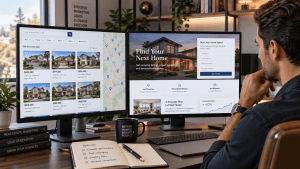
- Real estate agents
- Restaurants & cafés
- Local small businesses
- Nonprofits
- Coaches & consultants
- E-commerce beginners
You can also niche by industry + service:
- "I design conversion-focused websites for real estate agents."
- "I help coaches build online course websites."
- "I design brand-driven websites for local salons."
This type of specialization makes your offer stronger, clearer, and much more memorable.
Set Your Business Goals
From day one, treat your web design business as a real business.
Your goals will set the direction for everything you do.
Ask yourself:
- What kind of clients do I want to serve?
- How much income do I want to earn a month and a year from this business?
- Realistically, how many projects can I complete a month?
- Will I offer website maintenance packages?
- Do I want to stay a solopreneur or build a team of workers?
- What kind of lifestyle do I want my business to support?
Post these somewhere visible.
It will serve as a grounding mechanism in slow months, difficult projects, or changes.
Decide What Services You Will Provide
There's nothing wrong with not offering everything at the beginning, and as a matter of fact, you shouldn't offer everything. Services should begin with the essentials, then build on as you gain confidence and become in tune with your client's needs.
Some common services include:
- Website designing (WordPress, Shopify, static sites)
- Logo designing and branding
- Wireframes and UX architecture
- Installation and setup of WordPress
- Content writing or content support
- SEO optimization
- Website accessibility upgrades
- Speed and performance boosting
- E-commerce setup
- Monthly maintenance and support
A great beginner-friendly strategy is to package web design by small businesses, as clients seem quite happy with clear and simple packages rather than providing many custom quotes.
Define Your Pricing
Your pricing determines not just your income; it also decides the kind of clients you attract.
The most common pricing models are:
- Per project
- Per hour
- Per page
- Monthly retainer
- Packaged pricing
Things to consider when determining your rates:
- Your niche and its usual budgets
- Your skill level
- Your cost of living
- Business expenses (software, hosting, taxes)
- Value the website will add to your clients
Packages for the small companies are much more appealing, and they understand such packages easily rather than complex quotes. Examples include:
- Starter Website Package
- Standard Business Website
- E-commerce Package
- Monthly Maintenance Plans
Remember, raising your skills means raising your rates.
Choose Your Business Name
Starting with a Name of Approval
The name that you choose is your brand identity. Honor yourself with a name that resonates with you and sounds professional for the industry. Here are the factors to consider for your name:
- Should be easy to pronounce
- Easy to remember
- Domain available
- Represent services offered
- A profession — remains valid in the future
Domain availability should be checked prior to finalizing.
(Registration of a domain can be done through 4GoodHosting, so you have all tools related to your hosting in one place!)
Handle the Legal Setup
Every country has different laws; however, for the most part, freelancers will need:
- Business registration
- GST or tax registration
- A business bank account
- A contract system
- Basic business insurance
Not very glamorous, but a good reason to protects your cash flow, your assets, and, sometimes, your sanity.
Build Your Brand Identity
This is part of your organization that your clients come into contact with and recognize as a personality even before they meet or speak with you.
Your branding is about:
- Your logo
- The color palette you choose to use
- Typography
- Visual Style
- Your tone of voice
Construct a simple style guide for maintaining consistency of your branding expressed as:
- Your website
- Your proposals
- Your social media
- Your email signature
It also becomes good practice for other client projects of branding.
Build Your Own Website
Your own site is equally a yardstick for clients to judge you by if you are a web designer.
Make it clean, professional, functional, and fast.
What your site should contain:
- A strong homepage
- Services page
- Portfolio
- About page
- Contact page
- Testimonials
- An SEO blog
- Clear call-to-action
Host it on 4GoodHosting, which is the best hosting for web designers in Canada, as well as fast and secure WordPress hosting for designers who are looking for reliable performance.
Your choice of hosting affects:
- Speed
- Security
- SEO
- Reliability
- Client satisfaction
Good hosting makes YOU look like a better designer.
Build Your Portfolio
The portfolio is your most important tool for selling yourself.
As for starting, do not worry: there are numerous ways to do that.
With the help of your first portfolio entries, you may:
- Redesign existing websites
- Create websites for non-existent brands
- Work for little money for the first 3-5 clients
- Assist family members, friends, or local businesses
- Working on small projects on Fiverr or Upwork
Clients want to see what you can do — even if the examples aren't client-paid.
Create Your Web Design Workflow
Smooth workflows enhance professionalism and save countless hours. A typical workflow has the following activities:
- Discovery call.
- Proposal + contract.
- Deposit payment.
- Strategy & wireframes.
- Content collection.
- Design.
- Development.
- Testing.
- Launch.
- Maintenance & updates.
Clients LOVE designers who not only have a clear process but also follow it. This creates trust and minimizes unnecessary revisions.
Create Proposal & Contract Templates.
Templates save time and protect your business.
The proposal and the contract should list:
- Scope of work
- Deliverables
- Timeline
- Revision limits
- Payment schedule (always take a deposit!)
- Cancellation policy
- Rights & ownership
- Maintenance terms
This minimizes misunderstandings and sets the expectations from day one.
Promote Your Business.
Even the best designer won't get clients without being visible.
Ways to promote yourself include:
- Improved website SEO
- Helpful blog posts
- Social content (LinkedIn, Instagram, YouTube)
- Sharing case studies
- Participate in Facebook groups
- Google Business Profile
- Networking with local businesses
- Posting before-and-after redesigns
If you are working with small businesses, local SEO becomes even more important.
Start Reaching Out to Clients.
Don't wait for clients to come to you.
The fastest-growing designers are proactive.
Reach out to:
- Local businesses that need a better website
- Startup companies
- Coaches & consultants
- Real estate agents
- Restaurants
- E-commerce sellers
- Freelancers and creatives
Something of value can be offered to open the dialogue:
- Free homepage audit
- Suggestions for improvements to their current site
- Quick branding review
This way, you immediately place yourself in the helpful - not salesy - boat.
Keep Learning and Developing New Skills.
Web design is continually evolving.
Every day brings something new: tools, design trends, SEO guidelines, WordPress updates.
Aim to stay ahead through education:
- Trends in UX/UI
- SEO and on-page optimization
- Design focused on conversions
- WordPress builders and plugins
- AI design tools
- Speed optimization techniques
The more you grow, the more you can charge and the better results you deliver.
Final Thoughts
Starting a web design business isn't just about learning design tools: it's actually about creating the life you're proud of-the kind of life where your projects get chosen by you, creativity has a purpose, and work helps clients grow; income will grow with your effort or, in other words, 'when you're building websites for clients, never underestimate the importance of hosting. A slow or unreliable host can ruin even the best-looking site.' This is why many freelancers and agencies opt for 4GoodHosting-the most trusted hosting for web designers in Canada, especially those building on WordPress.
Should you decide to go for WordPress sites for your clients, then you've got to check their optimized WordPress hosting for designers; everything's done smoother on your end and your clients are happier.
Building a web design business is completely possible.
That was just your first step-.