


 Friendly competition is fine in most instances, but there’s really no such thing if it’s competition in a business space. Especially if what’s at stake is your online business’ profitability versus having it going to your competitors. If you’re in eCommerce then you need to have your website serving as the primary engine for your success, and ideally your website is better than your competitors’ sites too. One area where it really ought to be better if your aim is to have maximum visibility for new customers is with its search engine optimization, or SEO as it usually is used as an acronym. And good SEO can definitely be included with website design.
So yes your site can have good SEO right from the get-go, but what usually happens is that over time a site’s optimization needs to be revisited. Good SEO will by varying all the time based on the ever-changing algorithms of the search engines and that’s what it can be good to have a SEO audit for your site every several years or so. Often the folks you choose for website design in Toronto will be able to help you with that, or point your in the right direction to someone who really knows search engine optimization inside out. But it’s also something that you can get from you website hosting provider, and often for a much more agreeable price.
That’s the case right here at 4GoodHosting, and over the course of 20+ years of being in this business we’ve definitely gained a rock solid understanding of what it takes to have a website reliably coming up on the first or second page of search engine results. That doesn’t apply to everyone here, but it certainly does for the SEO experts that we have on tap and ready to help eCommerce business owners with improving their site. There can be quite a spread of improvements that go into that, and it’s not just so simple as incorporating the right keywords at the right densities.
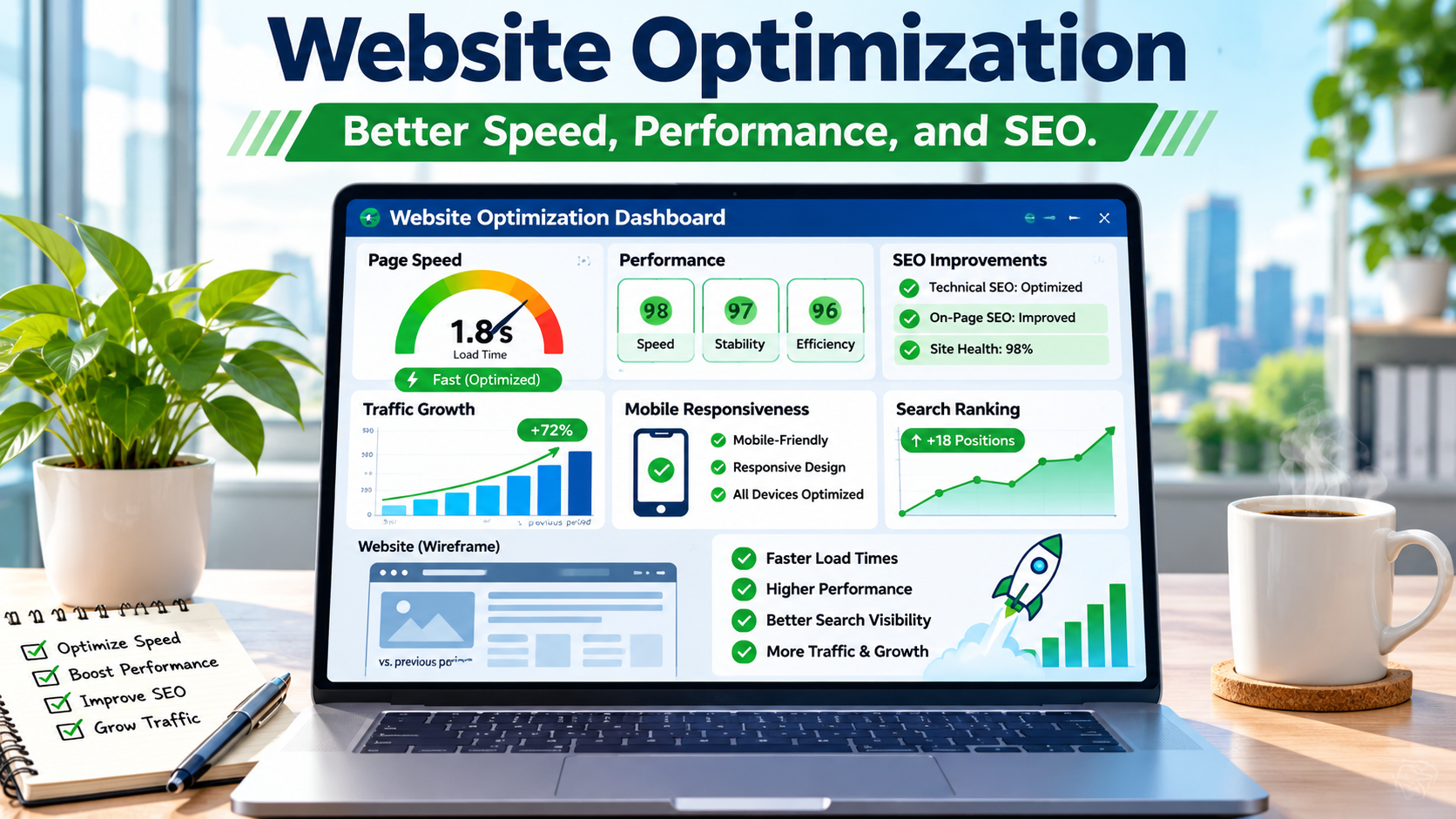
If it were that simple then the fact that anyone and everyone can figure out how to use Google AdWords fairly quickly would mean that they could so their own improvements and have better SEO for a website. But it’s not, and the same kind of difficulties might arrive if you’re trying to get your website to load faster and have better overall performance from it too. So what we’ll do with this week’s blog entry here is look at website optimization with a focus on better, speed, performance, and SEO.
Speed is a Need
Website speed optimization is where all of this starts, and it’s important to have fast-loading landing pages for anyone who is arriving at your eCommerce website. The impact on the rate of access of content from the website by the user extends to affecting your SEO and your conversion rates. These are not secondary considerations to website design, although you will want to also have an attractive and fully-functional site for yourself too. A fast loading website provides a better user experience and thus gets more engagement, improved search rank, and sales.
If the other end of the spectrum is the reality though then a slow-loading site may well displease users and cause them to leave. But the bigger concern may be that those slow-to-load web pages may be taking away from your site’s SEO. There’s a solid link between website speed and SEO, and the importance of having your site SEO-optimized is very much tied into having faster loading web pages.
There are many factors that will determine your ranking in search results provided to searchers by Google, Bing or any other popular search engine. Quality and backlinks are important for any website, but website speed has greater importance as a ranking factor. This is because these search engines have reoriented their algorithms to put greater relevance on the extent to which visitors find your site to have an agreeable user experience.
It’s been more than a decade since website page speed was cemented as a primary consideration for those algorithms, and it now applies to mobile web searchers as well. It’s for this reason that all eCommerce websites now need to have a mobile version of their site, which will be the one that’s presented to visitors who are browsing via their smartphone or another mobile device. Websites that load quickly and seamlessly will go up higher in the rankings, but poorly performing sites may lose ground because of their speed.
Bouncing is Bad
A website's bounce rate represents the number of users who land on the webpage and then leave for whatever reason. But the leading reason that happens is because a landing page doesn’t load within a reasonable period of time. Sites that have faster-loading pages have lower bounce rates right across the board. Research shows that if a website takes three or more seconds to load, 53% of its consumers will leave. You could lower your bounce rate and optimize your SEO performance by doing that.
The next consideration with this is crawl efficiency and indexing. The Googlebot is a crawler used by the search engine to go over websites and evaluate them for SEO worthiness. If a site is slow the Googlebot will not crawl and index all of that site’s pages with effectiveness. Fewer crawled pages means worse SEO for your website.
There’s also a very immediate on user satisfaction and engagement too. It’s easy to understand how a slow website will quash their satisfaction level nearly immediately, and if it’s an eCommerce website it’s unlikely that they’re going to proceed any further to see what you have to offer. Plus a slow e-commerce website can make potential customers abandon their cart before ordering anything from your website.
5 Best Practices for Website Speed Optimization
This leads to asking what’s the best way to have an eCommerce site performing better, faster, and having improved SEO because of it. We’ll conclude by sharing 7 very doable things that can be done to improve website page loading speeds.
Minimize HTTP Requests
The entirety of everything displayed on a web page is dependent on an HTTP request. Fewer HTTP requests means a page that loads faster and is displayed in front of prospective customers with the type of speediness they expect. This is possible combining files, using CSS sprites for images, and removing unnecessary plugins or third-party scripts. With website design Toronto your designer can often build web pages so that they are in line with this.
Optimize Images and Media Files
A website can really be hampered by large image and video files. Website speed can be increased if you optimize images and media files by compressing them. If this is done correctly you can do this without having a lower quality image. This is again something a web designer can do for you, but if you’re doing it yourself then it’s good to use formats like WebP for images. They are excellent for image compression without losing visual quality.
Use of a CDN (Content Delivery Network)
A content delivery networks is a collection of distant servers working to store static copy files on your site on every server. This can include anything ranging from images to script. With your eCommerce site paired with a CDN you can start serving content from the closest server to a user when accessing your site, and this means quicker load times and general improved website speed. This is especially important if your site is content heavy, although many eCommerce websites are not this way.
Enable Caching
Page caching is effective and highly recommended here too if you see the need to improve website performance. It really makes a big difference in regards to certain elements of your website being properly and quickly displayed on the user's device. It’s also a big plus if you have site visitors who’ll be returning, and that’s exactly what you want if you in online retail in any way. Their browser will not need to download these elements every time they return to your website and browser caching accelerates load times for repeat visitors.
Optimize Mobile Website Speed
We touched on how mobile optimization is supremely important nowadays given the predominance of mobile web browsing, and we have a mobile website builder for anyone who doesn’t yet have a mobile version of their eCommerce website. One of the most effective ways to optimize a mobile website version for better SEO is to use responsive design in order to make sure that your website adapts quite well to different screen sizes. Faster page load times will come alongside that.
Choose Superior Web Hosting Providers
It’s also necessary to mention the importance of a good Canadian web hosting provider here, and one that has servers that are capable of delivering and displaying your website with the speed and completeness you want. The quality of your web hosting has a big impact on how fast your website loads. Make sure you have a hosting company with a solid reputation for speedy and dependable service. VPS hosting is going to best if you have an eCommerce site that is going to have traffic spikes - many visitors arriving at the same time.
It may be best to hire a website design professional to optimize your site for better speed, performance, and SEO. Hiring an expert website developer means your page will load fast on all devices and visitors will have the user experience they want to have for themselves as they compare you with others who are in the same business as you and angling online just the same way you are.
They will almost certainly be making all the moves we’ve pointed out here, although their expertise will mean they get it down that much more quickly than you could. They will minimize HTTP requests, optimize images, and inspect every page to see if it can benefit from caching.