
Blog Menu G
Search
Categories
m
m

Category: Domain Related

adobestock 15190521 297x300
reading time Reading Time: 5 minutes

The last 3+ years or so has seen some very useful web development application tools being introduced to streamline the process of both creating and further developing websites. Here at 4GoodHosting we are always keen to offer more to our clients as part of being a quality Canadian web hosting provider, and we know that more than a few of you are the webmaster behind your website. In this week’s blog we are going to offer our recommendations on some of them that have really made the grade in our opinion and have much promise in allowing you to develop and expand upon your website. Developer Tools Notepad ++ - Choosing Notepad to write or edit your code is still a viable option, but there’s the potential to increase your productivity and efficiency with Notepad++. Among the more notable improvements with ++, it has syntax highlighting and syntax folding features that simplify the process of weeding out bugs, and a well designed tabbed interface allows you to work on multiple documents. In addition, Notepad++ boasts an auto-completion feature that makes writing code that much faster (relative to using Notepad). Notepad++ is available as both a full install and as a portable app. FileZilla - FileZilla is regarded as one of the best free FTP, SFTP, and FTPS clients around. Aside from being available for multiple platforms (Mac OSX, Linux, & Windows), it is relatively easy to navigate and use. It’s optimized for allowing webmasters to manually backup the files on their sites’ FTP servers and while FileZilla is only available as a full installer, it’s still really a top notch tool and worth the space if you’re especially active. Database Browser - This free tool lets you easily connect to databases, as well as modify data on your DBs and export or import data plus run SQL scripts any time you like. Notable supported database servers include MS Sql Server, ODBC, Oracle, MySql, BDE, SQLite, Firebird, and Interbase, among others. Like Notepad++, the program is available as both a portable app and full Windows installer. XAMPP - XAMPP gets high marks for the fact it is an extremely important tool...


You may find this interesting too.
adobestock 48802384 768x528
reading time Reading Time: 7 minutes

With the fact that the majority of customers are acquired through web searches these days, it’s an absolute necessity for any business to have a sound web presence. In contrast, during the early days of the Internet here was no telling how important and indispensable that presence would become. While the design, usability, and content of a company’s website are all important for success in digital marketing, business owners also need to look long and hard as to where they will choose to host their websites. When it comes to hosting, you really do need to understand that one size does not fit all. Here at 4GoodHosting, part of what has made us a reputable Canadian web hosting provider is the fact we’re very accountable to our customers in as far as their individual web hosting needs.Going with a web host that’s not an ideal fit for your business can result in a loss in revenue, detrimental effects on your SEO rankings, as well as the possibility of security and malware attacks. And it’s not just you the business that’s put at risk - your customers can be put in vulnerable positions as well, in particular with those same software and malware attacks. There’s no getting around the fact that the Web is an ever more competitive and dangerous space. As a result, businesses need to be very judicious in choosing web hosting. With that understood, we’re happy to offer you 6 tips here that can help businesses make the most solid choice for their web hosting. Understand the Entirety of Your Hosting Needs This may seem overly rudimentary, but business owners in the market for web hosting must first know what makes up the entirety of their online marketing needs. You’ll find that more than a few low-cost web hosting companies cut their operating costs by limiting the technologies they make available to you as a customer. Before you commit to one, make sure you ask yourself a series of questions Do I need special software, such as a CMS? What are my current traffic needs (how many visitors do I have to my website in a specific time...

You may find this interesting too.
adobestock 97034277 768x512
reading time Reading Time: 6 minutes

Here at 4GoodHosting, we take pride in being a premier Canadian web hosting provider that serves customers from Victoria all the way to St. John’s. But we’d like to take a moment to explain why we’re an even better choice for those of you who are also residents of the Lower Mainland and Greater Vancouver. Read on. The Internet has been of tremendous benefit for nearly everyone on the planet and for pretty much every conceivable objective out there, and accordingly greater and greater numbers of web hosting providers have popped up to meet demand as people realize the value in taking whatever it is they have - be it a business, blog, personal venture, or anything else - onto the web. In the early years of the web, there was not much in the way of any connection to providers outside of your immediate locale Of course, that’s no longer the case. Your web hosting provider can be located on the other side of the planet if you’re pleased with their rates, service, and the reliability of the web hosting. You may well find that a provider that’s nowhere near where you’re located is offering some very attractive features or offers like more storage, lower price points and other additions. Without a doubt, more than a few web hosting customers in our B.C. backyard have taken their hosting business elsewhere, and that’s honestly as it should have been. However, more recent developments in the big picture of the world of Internet marketing has made it that there are advantages to having a local web hosting provider. Let’s discuss them. Impact on Google Ranking When a website is first created, it will assume an Internet Protocol, or IP address, that is assigned to it. It references the location, geographically, where the website was created, it’s ‘original location’. However, If you are a B.C. company that has acquired your hosting from an American provider, for example, your website’s IP address will be an American based on wherever it is they’re located. This influences the way Google views your website, as despite the fact you are a BC user, you have an...

You may find this interesting too.
adobestock 55680104
reading time Reading Time: 7 minutes

As a small business these days, you need to be strongly fortified and streamlined with your digital marketing and business management fronts, perhaps more so than with any other aspect of your operations. As a reputable Canadian web hosting provider, here at 4GoodHosting we try to keep tabs on industry developments that will be of interest to our customers who are small business owners. The construction of an information technology infrastructure can be decidedly complex - and expensive - for businesses that are either new or still in their formative stages. Common detriments include limited resources, expertise, and time constraints when it comes to the way they find they are limited with how much they’re are able to accomplish. And it’s not only a case of accomplishing, it’s also about doing so in a timely manner to take full advantage of opportunities for the business Software companies have been receptive to this challenge, building web-based tools that are either specifically designed for small businesses, or ones that can be configured to be more ideally suited to the more-exploratory operating challenges for those of you who are still fairly wet behind the ears when it comes to running a business (and particularly ones where the business relies heavily on the digital marketing front). No where are these challenges more readily apparent - for most at least - than they are within the realms of communication and commerce online. This shouldn’t come as a surprise. Effectively communicating with prospective customers, and then facilitating their purchases or any type of commercial transaction in a speedy, reliable, and secure manner are 2 of the more pressing needs for any business. So, without further adieu, we’ve compiled a list of 9 super communication and commerce-based apps for small businesses that we feel really make the grade and then some when it comes usability, functionality, and readily-apparent value for you. Asana Collaboration Efficiently working together to accomplish tasks is a primary need for any business. Asana makes for a more natural and cohesive, collaborative teamwork process. Asana's free version supports up to 15 team members, which is perfect for even smaller businesses that don't need more...

You may find this interesting too.
fullscreen capture 452017 75232 am.bmp
reading time Reading Time: 6 minutes

Here at 4GoodHosting, we’re a reputable web hosting service provider in Canada and we like to think we’ve got our thumbs sufficiently on the pulse of what’s new in the digital marketing world too. The ‘stack’ we’re going to talk about today is all about computing and the new way in which cloud computing, in particular, has revolutionized the way people access and utilize resources made available through the internet. We always have tips for improving your online marketing presence, but this blog post is really more about some of the more notable developments in cloud computing as they pertain to business. The Cloud is a broad collection of services, and these days there’s plenty of options in regards to the way you can optimize them for the benefit of your company and organization. The stack is the broad range of services built on top of one another - thus the stack. Each one owes much of its stability and practicality to the one underneath it, as we’ll highlight shortly. Unparalleled Network Access Services make the grade as ‘Cloud’ worthy when they feature: On-demand self service - any time and anywhere you want it, sign up and receive service without delay Broad and uninhibited network access across varied devices (desktop, laptop, AND mobile) Extensive resource pooling Rapid elasticity - able to flex upwards and downwards in relation to demand surges and sags Measured service that is billed accordingly, and with transparency The Stack Itself Alright, picture a pyramid divided into 3 sections. The pointed top is SaaS (software as a service). The middle section is Paas (platform as a service) and the base is IaaS (infrastructure as a service). SaaS applications are intended for delivery to end users, and that delivery occurs immediately via the web (analogy - think passengers) PaaS encompasses all of the tools and services that make coding and deploying those services occur smoothly, reliably, and relatively understandably (analogy - think vehicles) IaaS is the groundwork - the hardware and software powering it all along. This can be servers, storage, networks, operating systems (analogy - think roadways) SaaS is software that’s deployed over the internet. To put...

You may find this interesting too.
adobestock 109999937
reading time Reading Time: 7 minutes

As an experienced Canadian web hosting provider, we’re well aware that not ALL of our clients are in business - and more specifically in e-commerce businesses. There’s a good number of you who have your basic web hosting packages for personal interest or promotional websites, and for those folks knowing how to rank higher on Google search results won’t be as pressing a need. For the rest of you who are fully into competing for higher search engine rankings, it’s a fact that Google is constantly altering and updating its algorithms. Let’s discuss approaches that are in line with the current search engine tunings coming from down there in Silicon Valley. Those Ever-Changing SERP Algorithms Many factors come into play as these aforementioned Google algorithm’s regularly evolve. Many of these transformations are in response to measurable changes among users’ habits (The increasing predominance of mobile web browsing, for instance). The way people consume search results and act on them plays a significant factor too, and Google monitors and analyzes every little detail extensively. Here’s what you need to know about what determines online search results in 2017. Featured snippets are now of increasing importance. Featured snippets can be more simply understood to be a direct answer, a summary of an answer to a query displayed on the top of the results page, often as a list of actionable bullet points or numbered steps. How they are advantageous is users get their questions answered directly on the results page, which is of course appealing because it means a straighter path to finding what they want and doesn’t involve any additional ‘clicks’. Google is showing these snippets in more than 32% of queries. (In 2015, the number was 28% and that’s expected to increase dramatically.) How’s all of this relevant, you ask? These featured snippets are extracted straight from the content of a website. One singular website that Google deems to have the best answer. If you want that website to be yours, you need to try to think about what questions your customers are asking and address those answers in as clearly and directly a manner as possible, and in the...

You may find this interesting too.
adobestock 106390261 768x384
reading time Reading Time: 5 minutes

Taking a critical look at big data gives companies valuable insights that allow them to make better-informed strategic decisions. Looking at these insights - and then making smart strategic moves based on your deductions - gives you the edge over your competitors and provides a more complete picture of your business. Undertaking big data analytics isn’t the simplest of processes though. You need the computing resources in place for it to be done effectively, and here at 4GoodHosting we like to share what we know as a Canadian web hosting provider who understands Internet marketing as well. So, What Exactly is Cloud Analytics? Cloud analytics is a cloud-based solution which enables businesses to carry out analyses and related intelligence procedures through integrated cloud models, whether that’s with hosted data warehouses, SaaS business intelligence (BI) or cloud-powered social media analytics. A whole range of analytical tools and techniques are put to work to help companies extract information from massive data and then present it in a way that is easily categorized, readily available via a web browser, and - most importantly - digestible and comprehensible for those who have interests in it. A Unified Vision For The Business Many companies face problems when different elements within the organization do not share the same perception of what is going well for the company - and what isn’t. Often, they are all working from their own data sets without a collectively agreed-upon ‘big picture.’ Cloud analytics makes it easier to identify and firmly define what that big picture should be. One of the crucial advantages of using cloud analytics is its ability to consolidate big data from all sources and communication channels that a company employs. The capacity that cloud computing offers allows everything to feed in in a linear and timely manner: you can gather large-scale data from all your internal apps, devices, social networks and data subscriptions. Needless to say, that would be difficult to do in-house and on a single network. Using a cloud-based data management platform lets you easily blend data from a range of sources, enabling it to be matched, merged and cleansed – with the collective volume...

You may find this interesting too.
adobestock 37876999 768x512

No one will be better informed than a Canadian web hosting service provider to detail the way today’s data centers can really ramp up operating costs. There’s a whole host of reasons for that, but nearly every one of them is contained in those centers’ digital architecture, and their sensors and instrumentation specifically. Making correct analyses of where inefficient operation is occurring is often beyond the means of even the most digitally savvy of us, but certainly not for the smart folks at Intel. Intel’s Data Center Manager helps data center operators lower costs and extend infrastructure life spans by automating data collection and presenting insights into ideal operating conditions and configurations. It involves identify and monitoring as many individual data points, so when there’s a problematic inefficiency, users are able to know exactly where it is. One of the common issues DCM data reveals is a need to increase the temperature in datacenters and thus minimize cooling costs. This shouldn’t come as a surprise entirely, given the ever-increasing workload these data centers face and the according way they will tend to run hot as a result. There are more data points than ever, and so by extracting that data and looking at it from a more objective perspective, you can be confident in choosing to turn up the temperature as a means of lowering your air conditioning costs. From there, the DCM team can set threshold levels and implement algorithms to try to predict temperatures and to alert datacenter operators of potential problems. Just one example of how Intel’s DCM is super effective in helping to manage and keep a Data Center cost controlled. Here’s more: Languages to Communicate Across OEMs All hardware manufacturers follow the Intelligent Platform Management Interface, or IPMI, specifications to report performance metrics independently of the hardware’s CPU, firmware, or operating system. Each brand customizes their IPMI feed slightly to differentiate their products, and that’s to be expected. DCM provides a simplified data feed to infrastructure and application performance managers to interpret or to connect with a facilities management interface. The out-of-band solution has its own discovery mechanism to locate network devices and languages, and...

You may find this interesting too.
adobestock 38796510 768x555
reading time Reading Time: 4 minutes

www.merriam-webster.com is pretty much the go-to online dictionary of choice these days, and it offers a full 10 different categorical definitions for the word domain, but most people will understand it to mean ‘space thats yours.’ The prefix ‘sub-‘ generally indicates a state of being beneath or under the suffix, whether literally or figuratively. Here at 4GoodHosting, we’re web hosting experts in Canada but we’re the furthest thing from that when it comes to dictionaries. Just this once though we’ll take a dissection approach to the word subdomain, and talk briefly about how it relates to web hosting as a whole. If we’re taking the literal meaning of it based on what’s explained above, it means ‘under space’ and while that’s vague and indeterminate it’s still fairly applicable. A subdomain is the part of the website address before the domain name. More in sticking with our definition here though, subdomains are known as ‘third level’ domains, or canonical names, and as such they’re ‘beneath’ a website’s standard URL that’s registered, recognized, and functional within web directories. To put it more simply and understandably, a website’s URL will begin with the very recognizable http: (hyper text transfer protocol) - but you’re probably more familiar with it as it’s subdomain - www.______. com / ca etc etc. Let’s use Merriam-Webster again as our example here. Their URL is https://www.merriam-webster.com/ but you’ll know them and link them with subdomain shown up on the first line of this blog post. That’s a subdomain! So why subdomains? Subdomains are commonly used to categorize portions of the website, and they can be easily moved to another server if the category gets very popular. Subdomains are also used by free web hosting providers to resell web space under their own domain name (e.g. http://membername.hostname.com). Each member will have their subdomain, but every one of them there will still share the domain name of the hosting provider. Subdomain names are also practical to balance the web servers for a high traffic website. Multiple web servers are assigned different subdomains like www.sitename.com, www1.sitename.com, www2.sitename.com etc, though each of them contain the same application code. When the request comes from...

You may find this interesting too.
4gh blog post pic.webp
reading time Reading Time: 7 minutes

It’s increasingly rare these days to find a business that doesn’t have their own website. As is the case with every one of them, there’s a whole lot of work that goes into a website – planning, designing, and the actual construction of the different HTML elements that together make up those web pages we’re happy to just visit and browse through as we like. Be aware that there are choices you can make when putting your website together, however, that can have negative repercussions down the line and quite possibly sabotage the successes you envisioned for yourself when you decided to take your business onto the World Wide Web. Start with the Right Conceptual Thinking First off, all of the following are FALSE: I need a flashy website that looks ‘cool’ Believe us when we tell you that substance trumps flush in a big way when it comes to the entirety of your online presence. Stressing to your web designer that it’s all-important to have a ‘cutting edge’ site is creating the wrong perspective for what you want to be accomplishing here. Keep in mind that this isn’t a competition about ‘looks’, it’s about effectively conveying to your customers THAT WHICH IS IMPORTANT TO THEM – which, in nearly every instance, is a quality product or service that’s priced reasonably and comes with positive reviews from buyers just like them. What your website looks like will pretty much be the last of their considerations. It’s always good to save few bucks by having my friend / relative / other design my website for a discount For sure, hiring designers or developers with many years of experience and a proven portfolio of work can be expensive. The best professionals can and do charge what they do because – in addition to designing the website – they also often research, plan, and strategize the entire conversion process and site flow as well. Needless to say, you stand to benefit IMMENSELY from this value-added part of their service, and these types of analytical approaches are very likely going to be beyond the ability of the guy or gal you know. Hiring a...

You may find this interesting too.
adobestock 127688780 768x512

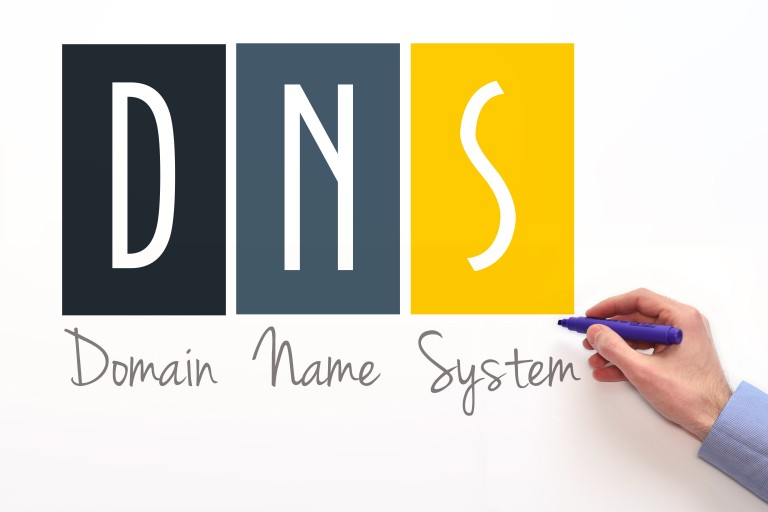
DNS isn’t exactly a buzzword in discussions among web hosting providers or those in the web hosting industry, but it’s darn close to it. DNS is an acronym for Domain Name Servers and what DNS does is see to it that after entering a website URL into your browser you then end up in the right spot - among the millions upon millions of them - on the World Wide Web. When you enter this URL, your browser starts trying to figure out where that website is by pinging a series of servers. These could be resolving name servers, authoritative name servers, or domain registrars, among others. But those servers themselves - often located all around the world - are only fulfilling an individual part in the overall process. The process itself is a verification of identities by means of converting URLs into identifiable IP addresses, which the networks communicate with each other and by which your browser confirms that it’s taking you down the right path. In a world with literally billions of paths, that’s a more impressive feat than you might think, especially when you consider it’s done in mere seconds and with impressive consistency. It’s quite common to hear of DNS in conjunction with DDoS, with is another strange acronym that is paired with the term ‘attack’ to create a phenomena noun. What DDoS is and how it’s related so explicitly to DNS much of the time is as follows: A DDoS attack is a common hack in which multiple compromised computers are used to attack a single system by overloading it with server requests. In a DDoS attack, hackers will use often use infected computers to create a flood of traffic originating from many different sources, potentially thousands or even hundreds of thousands. By using all of the infected computers, a hacker can effectively circumvent any blocks that might be put on a single IP address. It also makes it harder to identify a legitimate request compared to one coming from an attacker. The DNS is compromised in the way browsers essentially can’t figure out where to go to find the information to load on the...

You may find this interesting too.
4goodhosting fiberoptic
reading time Reading Time: 3 minutes

In all this talk about, servers, databases, cloud storage etc etc., fibre optics have been a bit of a lesser light despite being the unsung hero in the successes we’ve seen in the supercharging the digital world. Now some of you will know what a Terabyte is, and others won’t. Most of you will be familiar with a Gigabyte though, and a Terabyte is 1,024 gigabytes. That’s a lot of capacity, and with that understood fibre optics cable these days can achieve transfer speeds up to 255Tbps. Simply put, that’s blazing fast and nearly every Canadian web hosting provider we don’t overlook the value those transfer rates have in letting us work with our clients in making their websites - and in the bigger picture their online marketing efforts - really pay off. What’s different nowadays is that it’s not just one single-core fibre. Fibre optic cables now feature a multi-core glass stem that allows for an enormous load of data to flow through it. While this technology is still a long way off from being used extensively throughout cities, it’s setting the tone for the newer upgrades poised to hit the fibre optics market, and they’re not far off. Information Super Expressway Many cable providers plan to upgrade their lines, with some of the major cities in the world soon to see cables capable of handling 400Gbps. That’s a huge upgrade from the current standard of 10Gb/s that many companies use. The newer fibre optic cables also include a host of upgrades and capabilities that really outdistance them from their predecessors. Here’s a quick reference of the improvements: Security - The integrity of an optic cable actually plays a role in how easily hackers can force their way into data stores. Now, fiber optic cables use light. That makes it tough to ‘grab interference’ as the term goes. About the only way to break into them is to physically break the cord. Since they use light to transmit data, all of the light escapes and makes it easy for network security to notice breaches in data. Design and Speed - These newer materials are lighter and thinner too. They...

You may find this interesting too.
adobestock 48881340
reading time Reading Time: 4 minutes

Anyone familiar with the acronym ARPANET? Perfectly understandable if you aren’t, even many in the IT World likely wouldn’t have a clue. So let’s introduce ARPANET and it’s significance to one of the more predominant technical developments in computing these days. ARPANET is the network that became the basis for the Internet, and began with the interconnection of four university computers in the late 60s. ARPANET sent information in small units called packets that could be routed on different paths before being reconstructed at their destination. The development of the TCP/IP protocols in the 1970s made it possible to expand the size of the network in a much more orderly way. The initial purpose was to communicate with and share computer resources among users at the 4 different connected institutions, and with that connection the application principle behind cloud computing was born. Today, we often hear the term “It’s in the Cloud” or “that’s Cloud based”. But what does that mean exactly (and as some might ask, ‘why is Cloud capitalized?’) To put it simply, data existing in a cloud simply means that it exists on multiple computers at once. Before understanding cloud technology you’ll need to have a basic grasp of server technology. Servers are powerful computers, similar to the technology in a desktop computer, just must more dynamic. When you take all the CPU power and memory of a server and make it a virtual server, the advantage becomes that it doesn’t physically exist anywhere, and can be moved from one host to another as needed and automatically. This is the “Cloud”. The virtual server that is created can move from one host to another as needed and be given more resources or drive space by grabbing more from the storage servers, known as SANs (Storage Area Network). Trends in Cloud Technology So despite being 48 years in the making, it’s only in the last 15 years or so that Cloud computing has established itself. Even that number may surprise some who would think it’d be much less given the ‘newness’ of the technology to the public. In the early 2000s, Clouds were used, but they were more...

You may find this interesting too.
googlesux
reading time Reading Time: 4 minutes

There’s no debating that Google is the world’s #1 search engine, and any website that exists for e-commerce should be tailored to match (at least reasonably) Google’s ever-changing search algorithms. Reliable web hosting is one thing and gets you solidly set up on the information superhighway, but you need to compete. But what about Bing? Some people are quite surprised to learn that Microsoft’s search engine is still a legitimate competitor for Google when it comes to being someone’s go-to searcher. Bing is also holding its own when it comes to being a destination for Search Ads, and it seems there’s a good number of reasons why some businesses are still considering Bing for at least part of their ad placements. Currently, Google owns 65% of market share for US searches, but that’s down from 72% since 2010. Where’s that 7 percent gone? You guessed it – Bing’s had the most growth over the last year, moving up to 19.7% (in part continuing to be powered by Microsoft’s acquisition of Yahoo years ago). So when it comes to cost-effective search ads - what’s the better choice - Google or Bing? Bing Keep in mind that Internet Explorer is still the default web browser for a Windows device, and Bing comes as the default search engine. This is a clear reflection that most Bing users are: Less computer savvy, given the fact that they’re not able to or not interested in upgrading to a more modern and functional web browser Generally over 35 years of age More of the blue-collar employment type as compared to white-collar It’s not difficult to identify how these findings validate Bing as a still-popular search engine. The blue-collar, over-35 working middle class crowd makes up a HUGE part of the purchasing public in both Canada and America and - you guessed it - because their PC came with Bing as the default search engine, more often than not Bing is their search engine. Google Google has hundreds of thousands more total searches and holds more of the market share in all countries except Russia, China, South Korea, and Japan. Research suggests that Google users are: Generally...

You may find this interesting too.
adobestock 101991716 768x403
reading time Reading Time: 5 minutes

One thing we can count on for this New Year of 2017 is that the world of SEO continues to change at lightning speed. It’s a day in and out reality for us digital marketers to be keeping up with customer usage and expectations, Google’s never ending algorithm updates, and any other of the daily seismic shifts in the world of digital marketing. Complacency will easily destroy your rankings, and rankings are oh so important when it comes to thriving or surviving in modern marketing. Considering that 93% of online experiences begin with search, prioritizing the latest best practices in digital marketing and optimization will be critical to the success of any website.So this new year is as good as any to take a fresh look at the trends and developments that we have seen throughout the past year and see how they’ll play a part in dictating where we are heading next. Let’s get to them shall we? Schema Using a schema markup is increasingly advisable for advertisers with changes to Google and user trends.Schema lays out your site more clearly for search engines to understand its nature, and of course this helps to ensure that it is displayed correctly. Schema can also be particularly helpful when Google decides to display rich answers, as is the case with quick answers or a rich card. Google has made known its preference to display answers that make it easier for users to find what they are looking for. Rich snippets are displayed for recipe and videos, AMP articles, local businesses, music, reviews, and TV & movies. Although this may change in the future, using the schema helps to ensure that your site is more likely to be identified and served up accordingly. Then there’s Google directing more towards Quick Answers, jumping up from just over 22% in December 2014 to over 40% by the beginning of 2016 and having continued to increase incrementally over this past year. Schema improves the effectiveness of your snippet boxes. Schema is these days tied very closely to RankBrain and artificial intelligence.This is to be expected, with this machine learning now standing as Google’s third most...

You may find this interesting too.
adobestock 64343543 768x401
reading time Reading Time: 7 minutes

The fact that small business owners are going to face challenges in growing their business and making it successful here in the digital age isn’t likely to change. It’s all too common to be up against box stores and large nationwide chains that boast marketing budgets, development teams, programmers, and pricing freedoms that simply aren’t an option for the smaller guy. But there are ways to give your business a boost with regards to your digital marketing efforts. We encourage you to become familiar with these various online tools that are proven-effective for giving big boosts for small businesses, and then begin utilizing any number of them for yourself. From heat mapping to email marketing, they can help you generate more customers AND allocate your digital marketing budget more wisely and whether you’re an online store or a physical retail shop is of no matter here. These tools are easily accessible, surprisingly simple to implement, and again – proven effective for people just like you. Google Alerts Google Alerts gets thumbs up right across the board from small business owners. All you need to do - after registering for the service of course - is select keywords that are related to the nature of your business and then request to be notified by Google Alerts when an article is published with one of those keywords. This is particularly helpful for quickly and easily finding content for you to link to from your company blog, keeping in mind that doing so is an important part of maintaining your SEO. For example, if you’d like to find content for your outdoor sporting goods store’s blog that’s seasonally relevant for this time of the year, you might have an alert with all articles with “ice fishing tips.” You can also receive alerts for when your company name is mentioned on the web, allowing you to share good news, commendations, or more simply when you’re being talked about. You can also set up alerts for your competitors as well, and be informed similarly when people are talking about them. Check out Google Alerts here SumoMe For us, SumoMe is pretty much a must-have for...

You may find this interesting too.
adobestock 60566331 768x512
reading time Reading Time: 4 minutes

It wasn’t that long ago that cloud storage was making quite the splash on the IT scene, and the fact that retaining files and data didn’t have to exclusively occur within hard drives was quite a revolutionary development. Right from day one, however, some people had concerns about the security of their information and other concerns related to a form of storage that wasn’t exclusively theirs. If it’s not my storage, they asked – then what’s to stop someone from reaching into that ‘cloud’ and helping themselves? The question’s fair enough, and in truth there’s been increasing concerns over pretty much every aspect of exchanging data over the Internet. A public survey down south in the States earlier this year revealed that 47% of people have cloud security concerns, and 80% of respondents support federal certification of cloud services. We can’t be certain if those same percentages would be reflected up here, but they likely would be. The next question, though, would quite naturally be – what would a web hosting or other related-service provider have to do, show, or prove to be federally (or nationally in our case) certified? Products and Services Fueling the Cloud Phenomenon There are all sorts of examples. Amazon’s Kindle and Apple’s integrated cloud are two good ones of where extremely in-demand products are establishing the cloud as the norm for accessible data and services. Small and medium sized businesses are also coming around en masse to cloud hosting, and e-commerce is especially familiar with the cloud now too. So for as uniformly well-received as its been, the overall security of cloud computing is still a work in progress. But the key word there is progress. Progress is being made, and recently very much so. It’s a common belief that – because the cloud is so increasingly popular and yet still a remote ‘location’ for external storage – hackers will be particularly enthusiastic about seeing if they can get their way in and pillage the village. The extent to which that’s true is highly debatable, but fact is it’s increasingly important for web hosting companies offering cloud products to anticipate weaknesses in cloud security and...

You may find this interesting too.
adobestock 87608495 768x280
reading time Reading Time: 7 minutes

It’s increasingly rare these days to find a business that doesn’t have their own website. As is the case with every one of them, there’s a whole lot of work that goes into a website – planning, designing, and the actual construction of the different HTML elements that together make up those web pages we’re happy to just visit and browse through as we like. Be aware that there are choices you can make when putting your website together, however, that can have negative repercussions down the line and quite possibly sabotage the successes you envisioned for yourself when you decided to take your business onto the World Wide Web. Start with the Right Conceptual Thinking First off, all of the following are FALSE: I need a flashy website that looks ‘cool’ Believe us when we tell you that substance trumps flush in a big way when it comes to the entirety of your online presence. Stressing to your web designer that it’s all-important to have a ‘cutting edge’ site is creating the wrong perspective for what you want to be accomplishing here. Keep in mind that this isn’t a competition about ‘looks’, it’s about effectively conveying to your customers THAT WHICH IS IMPORTANT TO THEM – which, in nearly every instance, is a quality product or service that’s priced reasonably and comes with positive reviews from buyers just like them. What your website looks like will pretty much be the last of their considerations. It’s always good to save few bucks by having my friend / relative / other design my website for a discount For sure, hiring designers or developers with many years of experience and a proven portfolio of work can be expensive. The best professionals can and do charge what they do because – in addition to designing the website – they also often research, plan, and strategize the entire conversion process and site flow as well. Needless to say, you stand to benefit IMMENSELY from this value-added part of their service, and these types of analytical approaches are very likely going to be beyond the ability of the guy or gal you know. Hiring a...

You may find this interesting too.
adobestock 48802384 768x528
reading time Reading Time: 6 minutes

Putting together a website involves making a whole lot of decisions. There’s design, functionality, content and more that needs to be chosen, and oftentimes making the best decisions there involves consulting with someone who’s more knowledgeable than you are with Internet marketing. One of the later decisions you’ll need to make – but one that is no less important – is what type of web hosting service will you need. That web hosting is a necessity for your website goes without saying (your site requires it to be accessible on the Web), but understand that most Canadian web hosting service providers will offer a number of different web hosting packages at different price points. When choosing which one will be best for you, your 3 primary considerations will be: Optimum performance Security Configuration options All of them coming, however, after you answer some very basic questions – what type of website do you have, what type of purpose(s) will it be serving (and how), and what type of incoming visitor volume do you expect to see for it? 3 To Start With Generally, web-hosting packages will include one of 3 different types of web hosting. These are: Shared hosting Platform / CMS (content management system) specific hosting VPS (virtual private server) hosting So what are they, and how do they differ? Shared Hosting Shared website hosting in Canada is ideal for small businesses, individual sites, sites that have low traffic volume, and sites that need to be launched as soon as possible. And a big part of why it’s ideal for many people is – quite simply – it’s the most affordable option and you can often secure shared Canadian web hosting for less than $25 a month. Shared hosting works by the service provider having any number of large, expansive servers where data is stored. With a shared hosting package, you – and many others like you – get a portion of this expansive space. It’s not unlike renting a room in a hotel, you’ve got your own little spot – and so does the fellow next to you. This option also has a genuine user-friendly appeal, as shared...

You may find this interesting too.
adobestock 75640708 768x512
reading time Reading Time: 5 minutes

The word ‘blog’ is a term that’s a condensed version of ‘web log’, and these days they’re incredibly popular as a means for people to express themselves and share their interests, expertise, or perspective on what’s new in life or what’s happening in the world. You can start by understanding this - setting up a blog isn’t difficult at all, and if you’ve got quality content (writing) and some snappy images to go along with them then it’s equally easy to have people visit your blog regularly. Here’s a few tips and guidelines so that you can get off on the right foot and avoid making the kinds of mistakes that are common for newbie bloggers. Construction Underway Any spot that’s located on the World Wide Web will need its own domain and web hosting, so the first thing you’ll need to do for a blog is to register your domain and get yourself an affordable web hosting package. Once you’ve done that, you need to familiarize yourself with a piece of content management software. WordPress is one of the most popular for the fact that it’s really simple to use and most folks can get the hang of it in a day or two. Download it and start installing the plugins and themes you’ll be using. Now to your content - What do you have to say, and why is it worthwhile sharing it with readers on the web? Maybe you’d like to promote a hobby of yours that you think would be super enjoyable for others to get into to. Maybe you’re a huge sports fan and you want to share your perspective on the big league and its players. Maybe you’ve got an idea that you think can become profitable if you build up the right readership and then attract advertisers. The possibilities are endless. Find a Niche It’s highly unlikely you’re the first one that’s thought of publishing what it is you’ve got in mind. That doesn’t mean that you can’t be successful with it. Find your niche within that subject matter and you’ll be able to distinguish yourself, and doing so is definitely important. So,...

You may find this interesting too.
On This Page G
Explore 4GOODHOSTING
Copyright © 2026 4GoodHosting. All Rights Reserved.
.CA by CIRA
+1 866 708 4678