



 Reading Time: 12 minutes
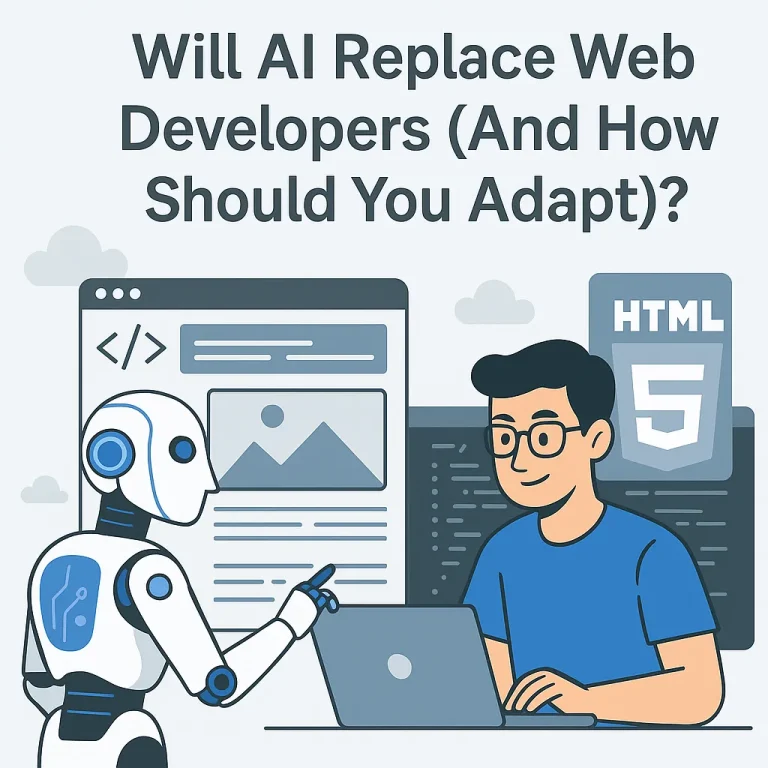
 The most obvious question about technology, as a matter of course, is, "Will AI take web developers' jobs?" [This is also why many people search for Will AI Replace Web Developers (And How Should You Adapt)?] A pretty substantiated question, but we can witness huge software codes generating itself and builders doing intelligent development more than ever before or, into the future, futuristic-looking tools, great boring jobs-ChatGPT, GitHub Copilot, Claude, Cursor, and all those AI site builders. But fact remains AI is changing web development, but not in a time when web developers will suddenly find themselves replaced by the new kid on the block. Certainly not in the nearer future, and definitely not for those willing to change. This is the Age of AI, and lucky enough, it has been closely following the pattern of the technology revolution, in which vehicles took over horses. Initially, there was a whole lot of panic amidst the scribbles of newspaper editorialists, but instead of actually "destroying" transportation, the automobile has been rather successful in redefining it, by creating a plethora of new jobs, new industries, and more. AI does to web development nowadays. Now, this post will discuss AI benefits and downsides and how developers (and agencies) can go with the social change by updating their strategies, mindsets, and tools. This shift also increases demand for best web hosting Canada for AI-powered websites. Section 1: How AI Is Transforming Web Development Direct-and- obvious, though. AI has proved itself: it has phenomenal capacity in performing some tasks. Automation of repetitive tasks: Work that would have taken several hours shrinks to a few minutes. Some of the areas of work involved in automated tasks include: Writing boilerplate codes Creating CSS layouts Generating components Bug fixing Running tests Writing documentation I even created a content scheduling tool for making the calendar, and normally I would spend six hours to eight hours on it, but two hours later, with AI-based development, I had my first working version-all productivity boost, no real replacement skill. Faster than human code writing. Modern tools can in a few seconds create full-fledged live applications in HTML, CSS, Javascript, or WordPress plugins....