


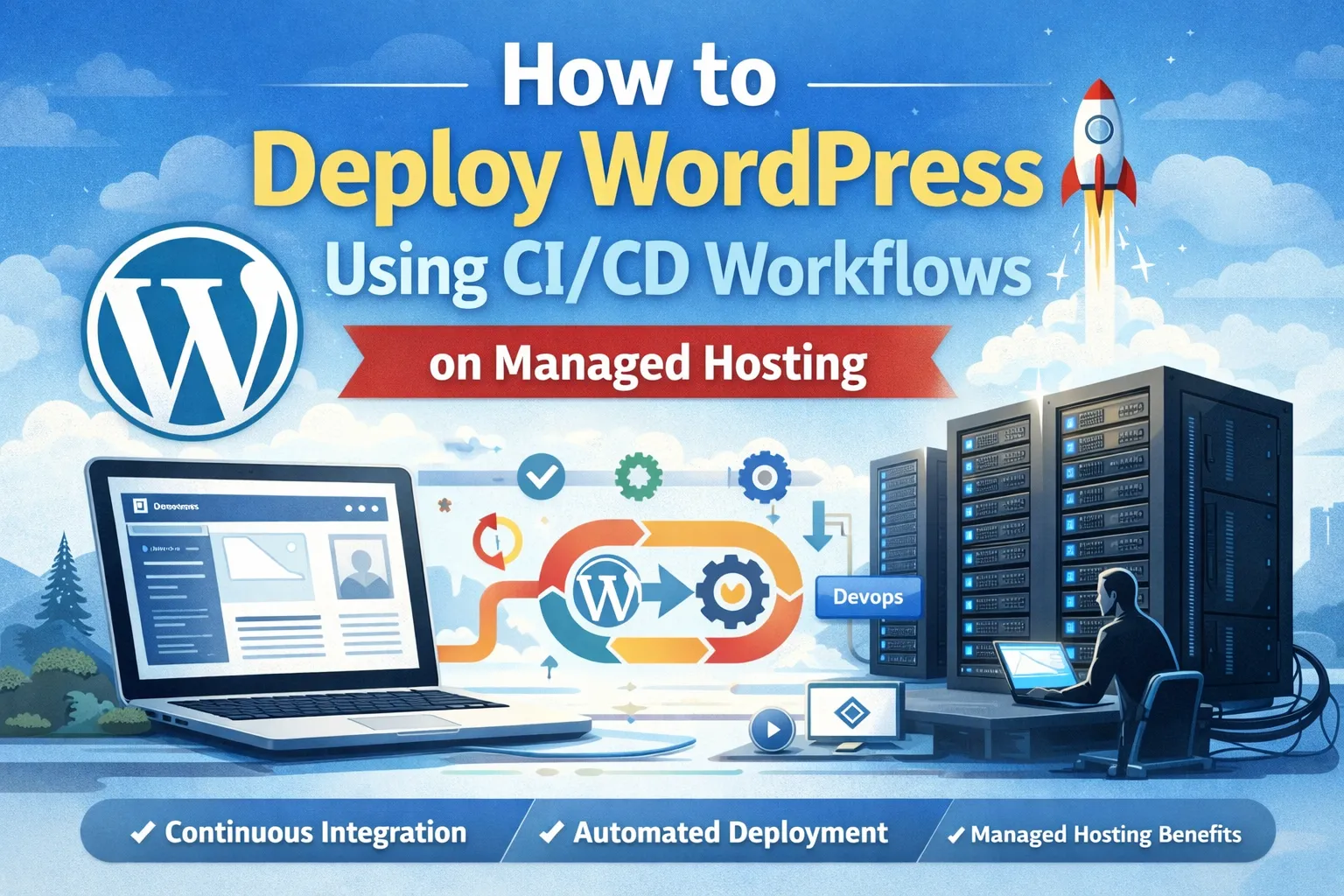
 Having wind in your sails means that you have resources working to your advantage in a natural way, and beyond the nautical reference as the literal meaning to that it can be applied to web development and WordPress websites too. If you are deploying WordPress and you’re putting something together that’s beyond a basic blog publishing platform for the website then there are going to be times where it’s going to be advantageous to be benefitting from natural momentum. In this instance we’re using the analogy to talk about CI/CD Workflows and with this week’s blog entry here we will go into detail about how managed WordPress hosting with CI/CD is such a good choice for WordPress site development.
These workflows automate the software development lifecycle, from code commit to production deployment, and what’s most notable in the context of WordPress development for a site is the ability to be facilitating continuous deployment. All of that will be dependent on the developer committing code to a shared repository, and this is what’s meant when someone is said to have ‘established the pipeline’ for WordPress deployment. Managed hosting for developers tends to be a better choice because there are going to be frameworks in place via the web hosting provider that make all of this a more expedited process.
The builder is still going to need to have a fair degree of WordPress web development savvy, however, and we’ll assume that applies to you if you’re going to be reading further here. Manual approval is going to be required for automated deployment to production too, but once you’re at the point along the production timeline then it tends to be clear sailing the rest of the way. We’ll stop with the seafaring references now and get right into focusing on the best approaches to using these workflows, along with why it’s best to do so when you’re already got the site sitting on a managed web hosting arrangement.
We’ve talked about the need for PIPEDA compliant hosting in Canada in previous entries here as well, and a quick reminder that if your site is going to be serving eCommerce interests and you’ll be gathering sensitive information from purchasers then this is a consideration you’ll probably want to look at.
Faster, Automated Deployment of Integrated Code
The 2-process method that applies to continuous integration and continuous deployment (CI/CD) in WordPress is increasingly central to software development with the platform. Continuous integration automates the new code integration into a WordPress application project. More importantly on the development side of thing, though, we can see how continuous development lets you automatically deploy the latest integrated code, and this is the primary gain that you’re set up to have when you opt for managed WordPress hosting with CI/CD.
That right there is the reason why so many WordPress developers use CI/CD to streamline their entire workflow. It’s entirely possible for your WordPress project too, and you can have the basic under your belt with the information that’s to follow here. Keep reading as we explore the benefits of WordPress CI/CD and how to use it. CI/CD is an automation method for streamlining code integration, delivery, and deployment processes, and anyone who’s weighing Managed hosting for developers is going to have it factoring into their decision. You can trigger CI/CD processes to build, test, and deploy code using a number of deployment tools that are available to developers these days.
And it’s all about the desirability of continuous integration and deployment in WordPress.
In the WordPress ecosystem. Many web developers and agencies use different applications and tools to implement continuous integration and deployment methods into their projects.
More often than not it’s the workflow automation they like best. A WordPress workflow typically starts with deploying code to a development environment for testing, but all of that is dependent on the code passing all the tests against the WordPress coding standards
From there what’s needed next is committing the code to the repository and deploying it to the live production environment. Having setup the right pipeline is important here, because it will determine the effectiveness of the automation of these processes when running the Git push. Done correctly and in the bigger development picture you can save money and time to focus on developing other parts of your WordPress project. Managed WordPress hosting with CI/CD takes a lot of that process off your hands, but one aspect of it that you will need to handle on your own is catching any bugs. And preferably as early as possible.
All code changes in any application must go through the WordPress unit tests. Automating the testing stage on staging sites allows for that catching and fixing of bugs for regular quality assurance. For a lot of developers this is conducive to completing WordPress projects on time and meeting any production standards that are expected of them. Plus if you can run an automated test suite it will give development teams better insights into the build’s quality. The ability to release features more frequently creates a constant feedback loop with the whole team and your clients.
Start Using WordPress CI/CD
Go with managed hosting and you can trust that your provider is on top of choosing the best CI/CD tools designed to automate app development workflow. Here’s what goes into setting up a CI/CD pipeline using integration and deployment tools for WordPress projects. The first step is deploying a Git repository first. With it you establish a development environment with a version control system to build features, fix bugs, and track changes while keeping the main development process intact.
Now it will be time to set up your CI/CD workflow, and here’s what’s involved with this part of the process. You’ll use your deployment tool to connect to a separate Git repository. Now clone the repository using an SSH key and add a webhook to it. This step is optional, but generally it’s something you should do to ensure the full solidity of your build. Next connect the webhook to your WordPress hosting account. With Managed hosting for developers you will already have the shelving in place to add the SSH key to the hosting account by navigating to Advanced → Git from cPanel.
Once you’ve reached this point you will have the option to either create a custom build step or pick one of the pre-made ones for automating common build tasks. The most common one for developers is to perform unit testing. This is is the standard preliminary step that will be conducted before the developer runs their build. Code the trigger into the WordPress project’s configuration file to do it manually or have your chosen deployment tool automatically trigger the build after every commit.
If you’re working with GitHub it offers a feature to create CI/CD workflows called GitHub Actions. A YAML file containing YAML syntaxes defines each workflow automatically triggered after each code push.
Nothing has really changed in the way that a CI/CD pipeline is a necessity in many software development projects, but with the new deployment tools available to developers it is becoming easier to automate code integration and deployment into an existing project, Managed WordPress hosting with CI/CD rolls those gains up into the package for paying customers, and it seems like many developers see the advantage in being able to have the entire workflow streamlined without needing to be responsible for deploying the entirety of the code themselves.
As always be in touch with us if you are needing to know more about why eCommerce WordPress site stores may need to be matched up with PIPEDA compliant hosting Canada.